Love Calls Us to Follow
Our current sermon series is called Love on the Cross. Today’s message is titled Love Calls Us to Follow. Our scripture reading is Mark 8: 34-36 if you care to follow in your Bibles.
Then he called the crowd to him along with his disciples and said: “Whoever wants to be my disciple must deny themselves and take up their cross and follow me. For whoever wants to save their life will lose it, but whoever loses their life for me and for the gospel will save it. What good is it for someone to gain the whole world, yet forfeit their soul?"
Imagine yourself standing at the railing of a cruise ship. You look toward the bow and see water beginning to cover it. You have mustered to your lifeboat station and have a spot available for you on the lifeboat. But you are leaving behind everything you have in your cabin. Would you go back to your cabin to try to recover the things of your life or board the lifeboat and save your life but lose all of the things of your old life?
How about you are trapped in your burning house. The fireman rescues you and carries you to safety. But the important things in your life are still inside and you risk losing them to the fire. Would you turn back into the fire to try to save some of the things of your old life, or accept salvation from the fireman?
That is the choice that Jesus poses today. Saving your life. “Whoever loses their life for me and for the gospel will save it.”
My wife, Kathy, is a student at Asbury Seminary pursuing a Masters in Spiritual Direction. She Is learning disciplined Bible reading. I discussed with her the passage for today and she encouraged me to read the verses several times and those that precede them and follow, to look at commentators, and, most importantly to view the scriptures from the perspective of the author. What was the author trying to say to the readers or the speaker to those hearing the words? I did that. Some of the commentators break the verses into three parts; deny themselves, take up their cross, and follow me. I think they are all of one theme. And far more serious than we may recognize.
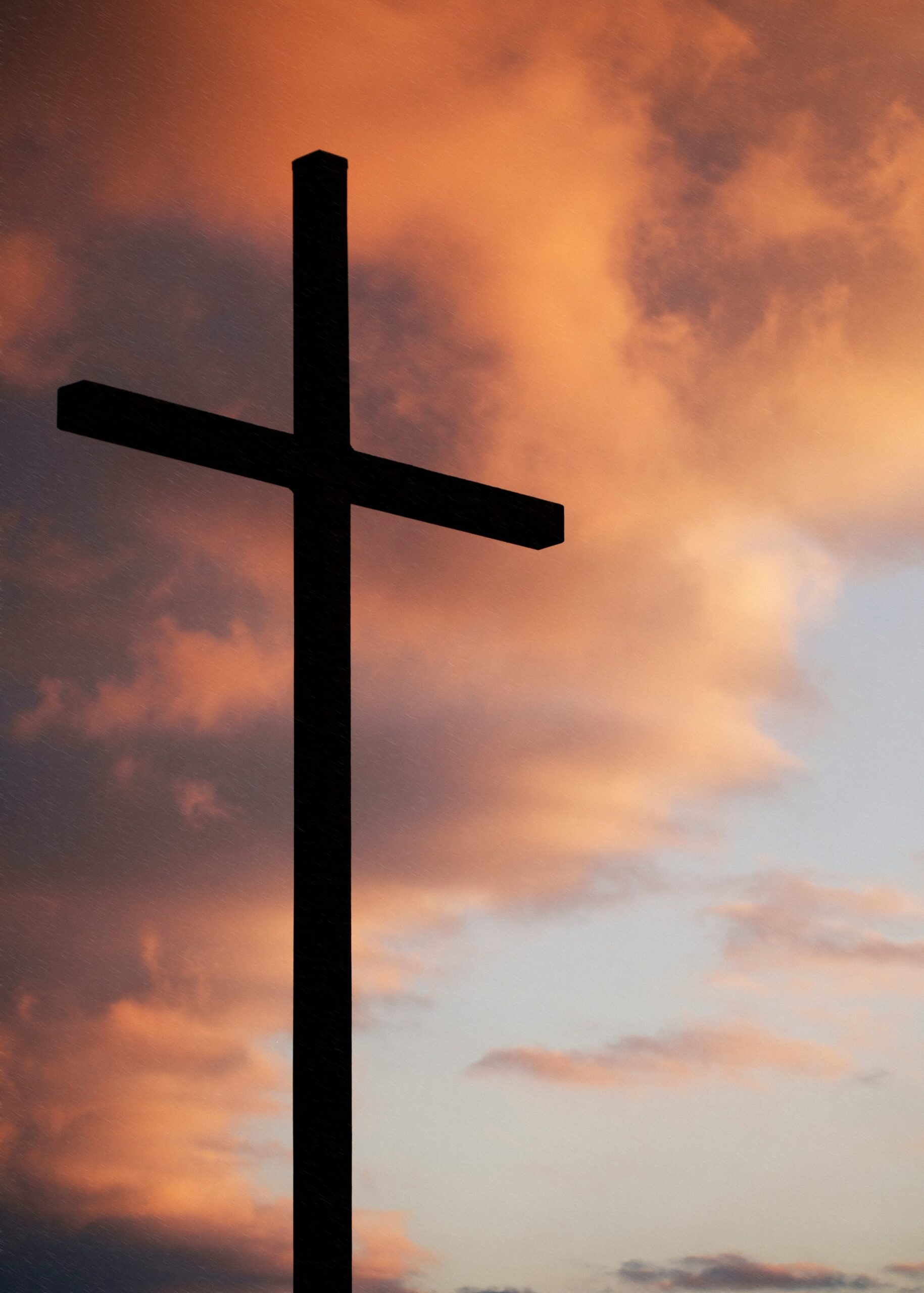
This was a message of love from Jesus, but certainly one of tough love. Take up your cross and follow Jesus is a very familiar passage. The cross has become such a familiar symbol to us that it is iconic, but also one we pass by without much reflection. It is everywhere, particularly around necks. A day can hardly pass without seeing a cross. I’ve always imagined dragging a full-sized cross behind Jesus when I hear this verse. And the meaning of crucifixion also has been devalued. We speak of being crucified by adverse events in many contexts. You baby-boomers may remember the Beatles singing in the Ballad of John and Yoko that he was going to be crucified, but really over nothing. But when Jesus spoke these words he was deadly serious.
When Jesus spoke, he had just mentioned that he would die, but he did not say that he would be crucified. That was unknown. But when he said to his followers that they must take up their cross, they knew exactly what he meant. They all had seen people carrying crosses on their backs through the streets on their way to crucifixion. And they all knew that crosses meant the most horrible of death. So when Jesus told them they had to take up their crosses, he was shocking them to understand how serious his challenge was. It was as serious as death.
Some hearers undoubtedly took him literally and were terrified. They had no desire to literally die and certainly not by crucifixion on a cross. That message probably was sufficient to turn some away. But the point of the message comes immediately before when Jesus says, “Whoever wants to be my disciple must deny themselves.” The point about taking up their cross was made to emphasize how serious the denial must be. If we are to follow Jesus we must take ourselves, our will, and nail it to a cross. This means total surrender of our lives to Christ. This means the death of our old lives. We cannot go back to our cabin and bring it with us. We have to completely leave our old lives behind.
As with the iconic cross and the idea of crucifixion, we have also compromised this challenge. Jesus was speaking of 24 by 7, 365 day surrender of our will. Complete surrender of our lives. No half measures. His challenge to take up our cross, to totally deny ourselves, is very serious. But if we are honest we have all diluted it.
We have convinced ourselves that we have a place for Christ in our lives, but also a place for the rest of our lives. Christ may fill one hour on Sundays, or also a mid-week study, or even perhaps a daily devotion. But then we go on about our lives without thinking about Christ or his Kingdom. Simply put, we may have submitted to Christ in our minds, but we still follow our sinful natures.
What are we to do? With sin in our lives still how can we deny ourselves totally and take up our cross? Listen to Paul from Romans 7: 21 – 8:2:
So I find this law at work: Although I want to do good, evil is right there with me. For in my inner being I delight in God’s law; but I see another law at work in me, waging war against the law of my mind and making me a prisoner of the law of sin at work within me. What a wretched man I am! Who will rescue me from this body that is subject to death?
Does this sound familiar to you? I know it does to me. I have often joked that I start the day giving myself to Christ and immediately start taking it back, so that by the end of the day it’s hard to see where he had any of me that day. Have you also tried to live the life Christ describes for us and failed? If you have, don’t feel bad. You have a lot of company. But the good news is that Jesus understands that we will. He was crucified, died on the cross, and rose from the dead to release us from the consequences of our failure to do what is right…..from our sin. But he also intends for us not to go on sinning. So how are we supposed to do that? Jesus dies for us knowing that we are sinners and cannot live a good life when left to our own devices, tells us to be good in a world that isn’t, we try and fail. Doesn’t that take us right back to where we started? But let’s go on with Paul.
Thanks be to God, who delivers me through Jesus Christ our Lord! So then, I myself in my mind am a slave to God’s law, but in my sinful nature a slave to the law of sin. Therefore, there is now no condemnation for those who are in Christ Jesus, because through Christ Jesus the law of the Spirit who gives life has set you free from the law of sin and death.
Becoming a Christian takes place when you claim your salvation in Christ and accept God’s grace. But following Christ means accepting the Holy Spirit into your life and being sanctified by the Spirit. It’s funny how we claim Christ, but then go right on with the old way of thinking that we must do good things and then be rewarded by God for what we do. It has been the way humanity has thought about God from the beginning of time. We rely upon ourselves to do what is right, fail, and then feel guilty. And in order to stop feeling guilty, we eventually stop trying. And it is exactly what Christ opposes as it means that we rely upon ourselves instead of Christ. But in Jesus Christ we have a new way of thinking, one that is based not on our actions but on God’s love which has been graciously poured into our hearts through the Holy Spirit.
The work of the Holy Spirit is what will enable you to live a good life in a world that isn’t. We nail our old lives to the cross not by trying to be the best person we can be, but by surrendering our will, or control, to the Holy Spirit. The work of the Holy Spirit in us is called sanctification. Through sanctification, the Holy Spirit re-creates us in the image of God. The Spirit makes us holy and sets us aside for God’s purposes. The Spirit changes our desires, attitudes, and actions to increasingly meet God’s expectations. We are transformed in our character and our conduct.
The Holy Spirit makes this transformation happen, but we have to allow it to happen. While we are being transformed sin continues to have a harmful effect on us. Sin may no longer dominate our lives, but we will continue to sin. We will continue to compromise with the world. But sin no longer has full control over our lives. By cooperating with the Holy Spirit, we are transformed gradually, throughout our lifetimes.
So what does this mean practically? It means you have to be willing to surrender yourself completely to the work of the Holy Spirit. That is the key. You have to be willing to deny yourself and nail your desires to the cross, even though Jesus knows you cannot do that perfectly. But you have to be willing.
Being a Christian requires you to give up on the idea that you really are in charge and stop trying to follow your own agenda. As we have discussed already, when we try to be in charge we inevitably fail. It means you have to surrender your ideas of right and wrong, what you should do and should not do, to Christ working in you through the Holy Spirit. This is serious stuff.
I’d like to share with you when I finally realized what that meant and what happened. I was a Type A Christian. That meant deciding what I needed to do and then pursuing that goal. I was serious, but seemingly in control. I had been an uncle since the age of seven and thought I knew everything about raising children. That all went out the window when our son was born. He was very bright and headstrong from the start. He was a handful. No matter what we did to try to get him to do what we wanted, he had a different idea. We seriously wondered if there were boarding kindergartens. I finally reached my wits end. I knew I was not in control and prayed as what I recall my first prayer of surrender. I told God that I was lost and had no idea what to do. I was desperate for guidance and turned the whole situation over to him. I cannot say when, but somewhere down the road it hit me that I was no longer impatient with my son. In fact, I had developed patience I had not known in many aspects of my life. Without realizing it, I had been transformed from a frustrated angry young man to one with patience, and I did nothing to get there except give it over to God.
Once I realized that surrender works, I repeated the process and realized other changes in my life. And it is a process. There may be people with dramatic immediate transformations in there lives, but for most of us the work of the Holy Spirit is a slow, daily process. The importance is not that you achieve complete surrender, but that you seek it and pursue it 24 by 7, 365 days a year.
But we are not all called to actually take up a cross and risk death or pay that price, to leave our homes, or to abandon our careers. But we are called. Each time we are presented with an opportunity to witness to Christ’s presence in our lives, through either our words or actions, so that one more person may hear Jesus calling in his or her life, we are called to a critical moment of faith. Each day Jesus calls us to trust Him with all aspects of our lives; to live that day according to His plan. And He gives us a fresh start every day even though we sin, a fresh chance every moment to nail our desires to the cross and claim anew His promise and live the next moment by trusting completely on His grace; by allowing Him to lead us in faith. So search your hearts now. Is Jesus there everyday? Do you invite Him in? Do you give Him your complete faith daily and share it with others? Do your friends at work and school know that being a Christian means more to you than a church membership card? What choices are you making in your daily critical moments of faith?
To live life in Christ means surrendering your life to faith. Doing so is scary. When you do, you don’t know where you are going; only who is taking you. You might even be leaving home for an unknown land, or leaving a career to follow an unknown rabbi,. It is hard to tell others of your faith in a time when doing so is considered exclusive and not popular. It is hard to live by faith when we live in a time that encourages us to focus on ourselves, our plans, and our desires. But unless you live by faith, surrender yourself to the Holy Spirit, you cannot enter into the relationship that God intends for us to have with Him.
Christ cannot be king in your life until you surrender that life to him. Not just part of your life, but all of it. When you do, the power of the king transforms you in ways you cannot imagine. C.S. Lewis wrote in Mere Christianity that Jesus was either the Son of God or a madman. You can only accept him as one or the other. If he was not the Son of God, then he was a lunatic because he repeatedly said he was the son of God. If, however, you accept him as the Son of God, then you cannot ignore his supremacy in all things and, particularly, all aspects of your life. I stand before you as a witness that he is the Son of God and that he reigns supreme. He wants us to put aside our rational thoughts and plans and surrender all to him as king. For some of the more hard-headed, those of the “God bless my plan” school such as me, he has to push hard to get us there. But it does not have to be that difficult or dramatic, you need only daily confess that you know that you cannot live life without God, without the transformation that Jesus can work in your life, and surrender your life to him, or whatever aspect you finally realize you cannot control. But start.
I guarantee you that if you do, you will find yourself gradually thinking differently, doing things you never thought you would do, and desiring different things in your life. Your friends and co-workers will regard you differently. It requires daily prayer and submission and studying the Word. Because you will measure yourself against the life described for us in the Word. But it is not magic. If you are on the journey, then continue daily surrender. If you are not, then I encourage you to start. That’s when you truly begin to reap the benefits of life in Christ’s Kingdom. Take up your cross and follow Him.
© 2026, Thomas M. Trezise
Welcome, I'm Tom
I'm Tom Trezise a retired lawyer and corporate executive with over twenty years of experience as a Methodist lay preacher. Raised in Appalachia, I proudly call myself a hillbilly at heart. I'm the executive director of The Everyday Kingdom, a non-profit devoted to fostering a community that helps people find and experience the peace, purpose, and joy available from living every day in Christ’s kingdom.
Search the Blog
Categories
Archives
New Release